
A first‑of‑its‑kind effort to protect Okanagan Lake and B.C. from invasive mussels has secured a new major funding commitment. Powered by the Okanagan Basin Water Board (OBWB), Rotary-led community support and local philanthropy, the UBC Okanagan research project will receive a new infusion from the City of Kelowna.
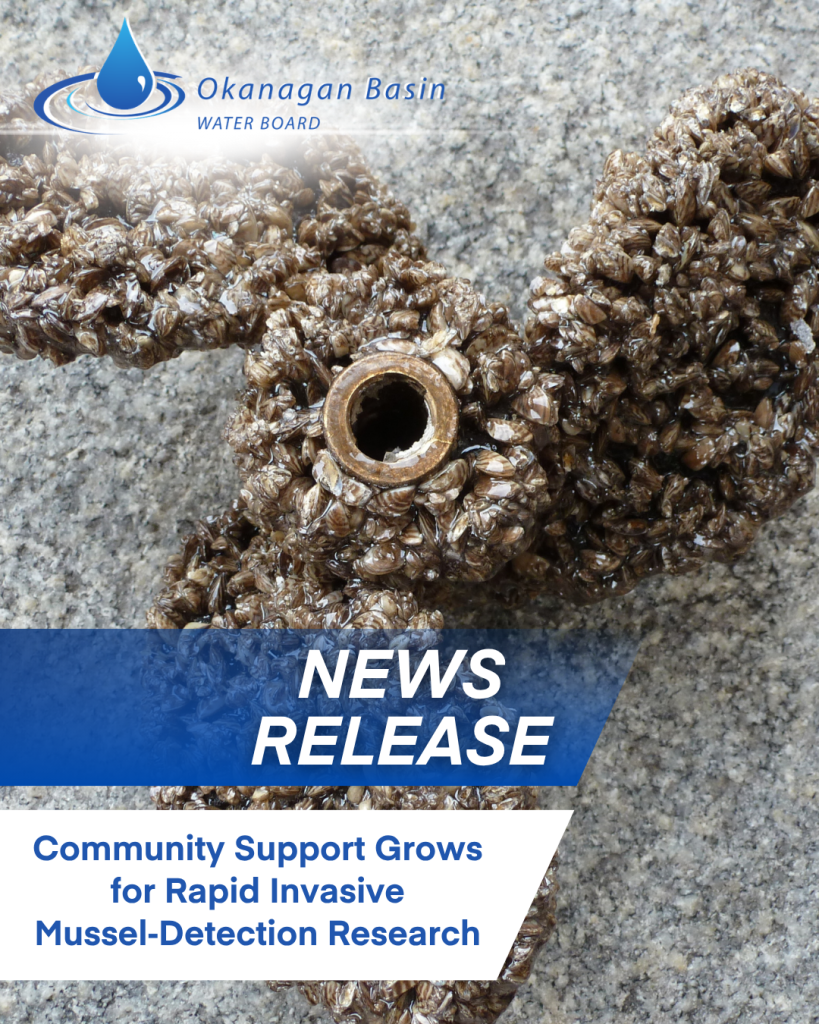
Led by UBC Okanagan geneticist Dr. Michael Russello, the project aims to develop a rapid, portable environmental DNA (eDNA) detection tool that will allow inspectors to identify invasive zebra, quagga and golden mussels in minutes, at the roadside. The tool will be designed for use directly at watercraft inspection stations, marinas and boat launch sites, strengthening regional and provincial biosecurity efforts.
With initial investments by the OBWB, The Colin & Lois Pritchard Foundation, Mitacs and strong community support spearheaded by Rotarians across the Thompson/Okanagan, the City of Kelowna has also joined the initiative through the City of Kelowna UBC Okanagan Research Alliance Collaborative Research Fund. The project is one of four new initiatives supported this year through the Alliance that aligns with their Climate Resilient Kelowna Strategy and 2040 Official Community Plan, both of which emphasize reducing risk posed by invasive species.
The City of Kelowna UBC Okanagan Research Alliance Collaborative Research Fund will contribute $100,000 to the project ($50,000 per year for two years).
UBCO Vice-Principal and Associate Vice-President of Research and Innovation, Dr. Suzie Currie, says the project demonstrates the value of research rooted in regional priorities.
“The City of Kelowna UBCO Research Alliance partners the City’s operational leadership and UBCO’s research excellence to work together to address real‑world community challenges in the Okanagan, says Dr. Currie. “The rapid eDNA invasive mussel detection project exemplifies this partnership in action, protecting Okanagan Lake’s biosecurity, infrastructure, and supporting Council priorities on health, economic prosperity, and climate resilience.”
Rotary clubs across the region have played a pivotal role, not only through direct contributions, but by leading grassroots fundraising efforts within their communities. This momentum builds on the leadership gift from The Colin & Lois Pritchard Foundation, whose early support helped launch the project and catalyze wider investment.
“We have never faced such an existential threat to our Valley’s lakes and rivers as invasive mussels pose. We must do whatever is necessary to ensure they never get into our water systems,” adds Colin Pritchard.
Once established, invasive mussels cannot be removed and can cause hundreds of millions of dollars in damage to water infrastructure, irrigation systems, ecosystems, and local economies. The eDNA tool has the potential to be a major step forward in early detection and prevention.
Scheduled for completion by March 2028, the project builds on the OBWB’s longstanding commitment to invasive mussel defense, including its Don’t Move a Mussel campaign.
While key funding pieces are now in place, partners say continued community support will help strengthen and expand the project’s impact. Residents, businesses, and community groups are encouraged to contribute and be part of a proactive, locally-driven solution to keep Okanagan waters mussel free for generations to come.
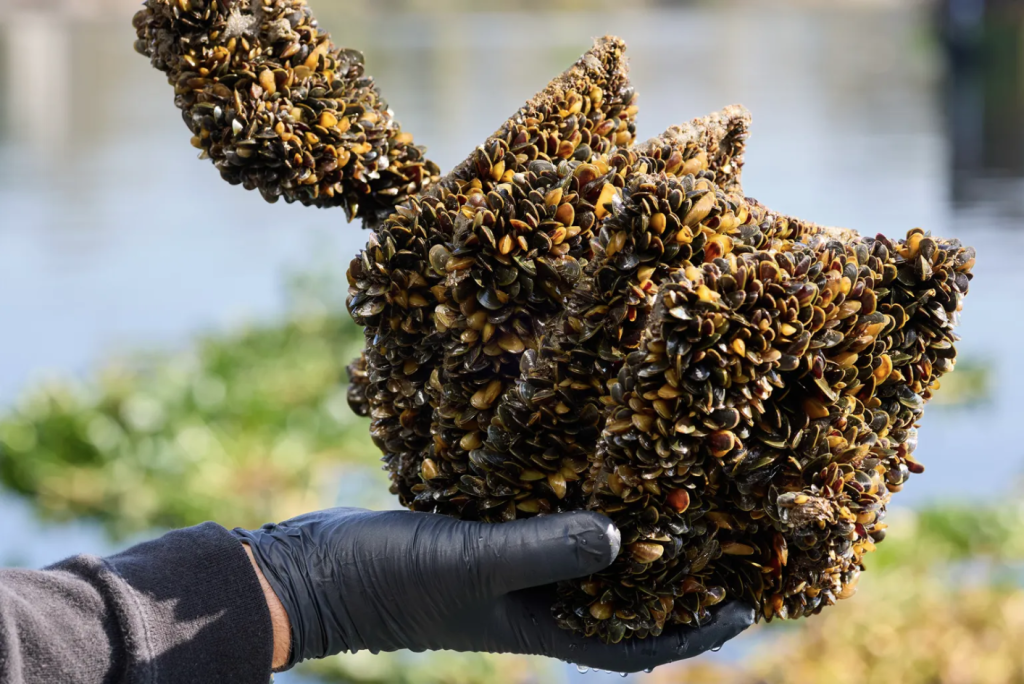
Sampling plates hauled from the water at the Port of Stockton were completely encrusted with mussels on Oct. 23, 2025. The plates are used to track the golden mussel invasion. Photo credit: Fred Greaves for CalMatters
How to Donate
Rotary invites individuals and organizations across the valley to take part:
- Donate via cheque;
- Payable to University of British Columbia Okanagan
- c/o Okanagan Basin Water Board. 1450 K.L.O. Road, Kelowna, B.C., V1W 3Z4
- Or click here to donate online.
- Donations over $25 will receive a tax receipt as a charitable donation, and all funding goes directly to the research for the eDNA project.